Poster Presentation International Celiac Disease Symposium 2026
Clinical, Functional, and Humanistic Burden of Celiac Disease (CeD) in Two Symptomatic Subgroups: A Multi-Stakeholder Qualitative Study in the United States of America (#332)
Background: CeD is primarily managed with a gluten-free diet (GFD), yet many patients remain symptomatic with a persistent functional burden despite strict adherence to the diet. Qualitative research comparing symptomatic CeD subgroups is limited.
Objectives: To characterize the patient journey, multidimensional burdens, and unmet needs in two CeD subgroups: Chronic Active (persistent symptoms despite GFD) and Episodic Symptomatic (flares after gluten exposure).
Methods: Nineteen U.S. adult CeD patients (9 Chronic Active, 10 Episodic) and 20 healthcare providers completed 6-day electronic diaries and semi-structured interviews. Data were thematically analyzed across patient journey stages (pre-diagnosis, diagnosis, daily management).
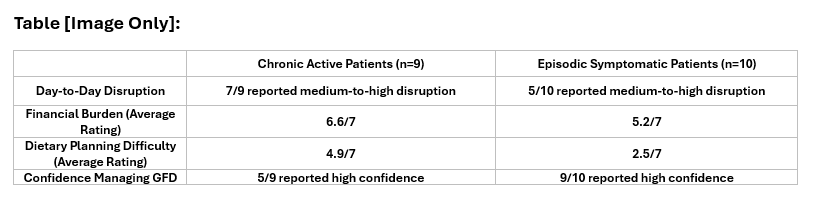
Results: Chronic Active participants reported persistent multisystem symptoms, frequent flares, incomplete post-exposure recovery, and substantial daily disruption. Episodic participants experienced intermittent gastrointestinal flares and reported greater confidence managing a GFD but had ongoing anxiety about accidental exposure and social restrictions. Patient-reported metrics (see Table) indicated Chronic Active patients more often had moderate-to-high daily disruption (7/9 vs 5/10) and a greater financial burden (mean 6.6 vs 5.2) than Episodic patients, who more frequently reported high confidence managing GFD (9/10 vs 5/9). Both subgroups emphasized constant vigilance (label checking, menu screening, carrying backup food) as a major burden. Clinicians highlighted the lack of therapeutic options beyond GFD as a key unmet need, particularly for patients who are symptomatic despite their diet. Across patients and clinicians, there was difficulty understanding and consistently applying terminology describing “chronic” versus “acute/episodic” CeD in qualitative research.
Conclusions: CeD symptoms and burdens often persist despite following a GFD. Chronic Active and Episodic patients have distinct experiences yet share unmet needs related to symptom control, social restrictions, and constant vigilance. Challenges with patient-segment terminology suggest a need for further research to develop clearer, patient-centered classifications.
Findings should be interpreted in context of the small U.S. sample and qualitative design