Poster Presentation International Celiac Disease Symposium 2026
The predictors of histological responders in celiac disease after following a gluten-free diet (#235)
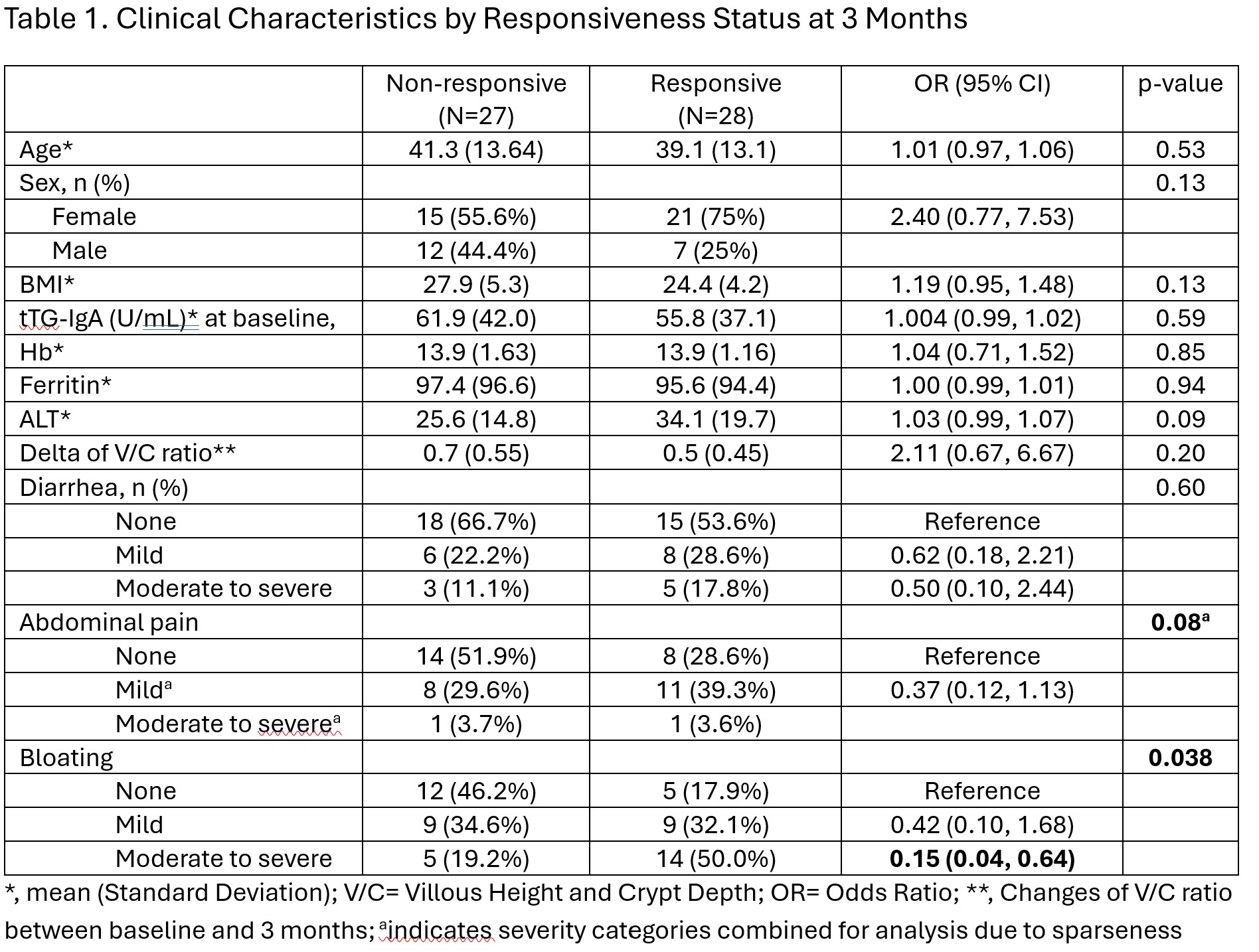 Background: Celiac disease (CeD) is an immune-mediated enteropathy triggered by dietary gluten in genetically susceptible individuals. A gluten-free diet (GFD) remains the only established treatment. However, more than 30% of patients experience an incomplete response, characterized by persistent symptoms and/or ongoing intestinal mucosal damage despite following GFD. Several studies have attempted to identify clinical and biological factors associated with non-response to a GFD; however, reliable predictors of treatment response have not been established. Therefore, the present study aimed to identify clinical characteristics associated with early histological responders to a GFD.
Methods: A total of 55 participants with confirmed CeD were included in the study. Participants were recruited at Mayo Clinic and the University of Chicago. Clinical data, symptom questionnaires, laboratory findings, and histologic assessments of endoscopic biopsy specimens were collected at three time points: at diagnosis (baseline), 3 months, and 12 months after following a GFD. Non-response was defined as an increase of less than 0.5 in the villous height-to-crypt depth ratio between diagnosis and 3 months after initiation of a GFD. Analyses were conducted using logistic regression to examine predictors of response.
Results: Among the 55 patients included in the current study, 28 were classified as histological responders and 27 as non-responders. Table summarize differences in baseline characteristics according to histologic responsiveness at 3 months. Baseline bloating differed significantly between responders and non-responders. Among lab findings, only ALT levels showed the trends (p=0.09). Other baseline clinical characteristics, including symptoms and lab findings, were not significantly associated with responsiveness at 3 months.
Conclusions: Baseline bloating and ALT levels may serve as potential indicators of early responsiveness or delayed mucosal healing in patients with newly diagnosed celiac disease. Further studies are needed to validate these findings and identify additional predictors of healing trajectories that may help guide individualized follow-up strategies.